
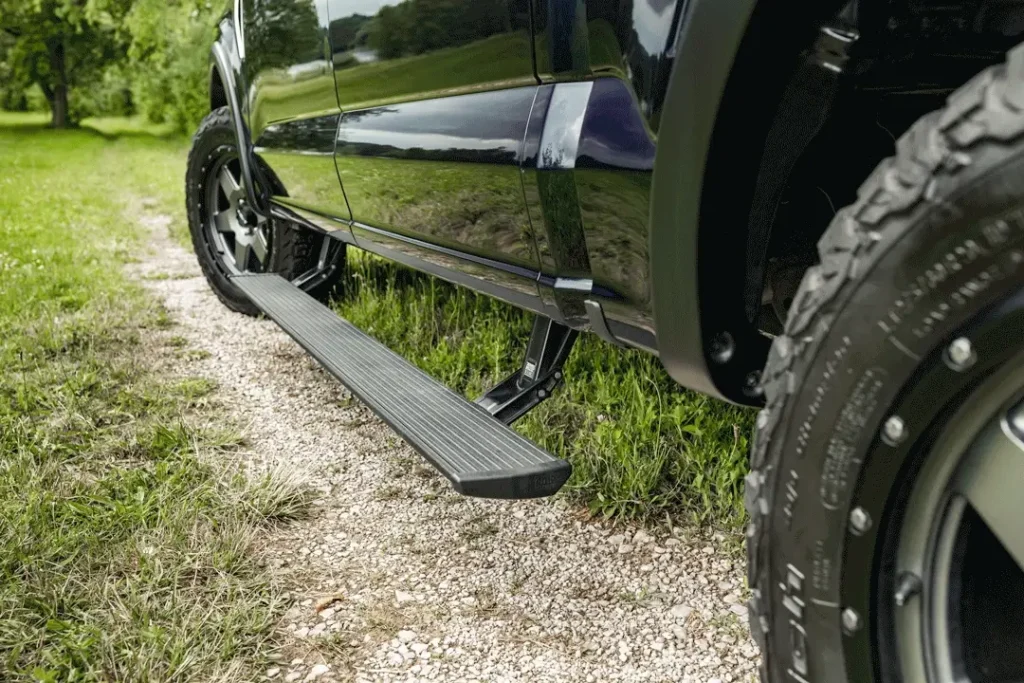
If you’re thinking about upgrading your truck with running boards, you’ve probably realized there are a lot of options. From sleek low-profile steps to heavy-duty off-road rock sliders, choosing the right running boards comes down to more than looks alone. The right setup can improve accessibility, protect your truck, and even complement your build’s style.
Whether you drive a daily commuter, a lifted off-road rig, or a family-friendly pickup, here’s how to choose the right running boards for your truck.
What Are Running Boards?
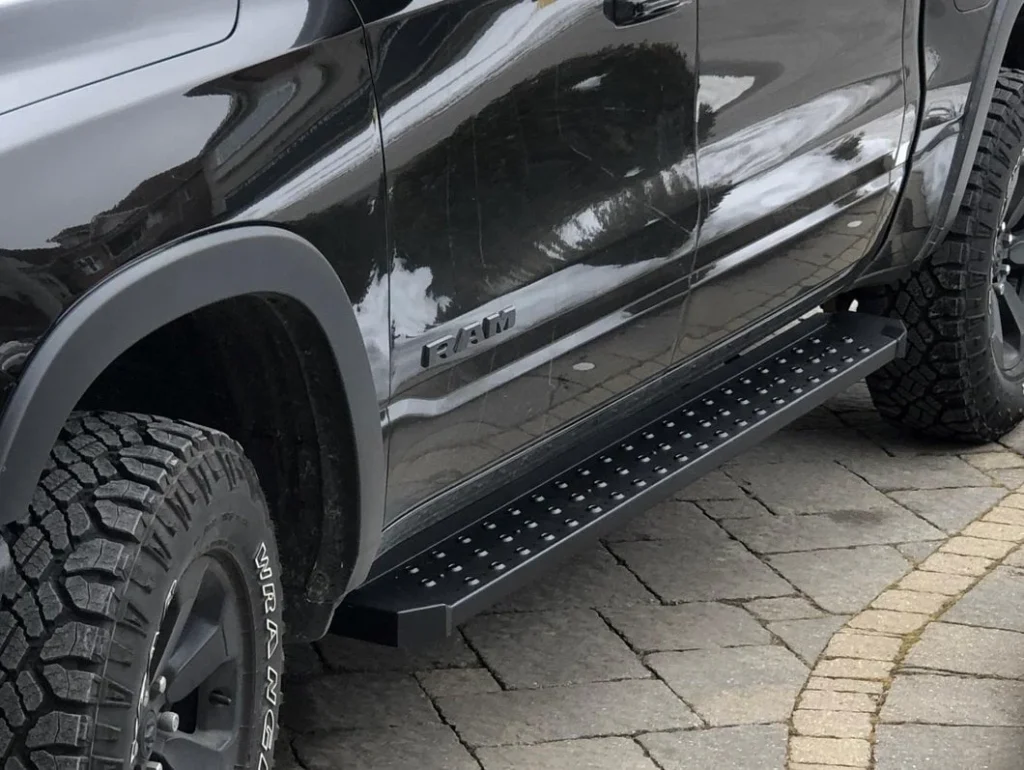
Running boards are side steps mounted beneath your truck’s doors to make entering and exiting easier. They also help protect lower body panels from road debris and can add a custom look to your vehicle.
While many people use “running boards,” “nerf bars,” and “side steps” interchangeably, they can have different designs and purposes.
Running Boards
Typically wider and flatter, offering a full stepping surface along the cab.
Need running boards installed in Baton Rouge or Denham Springs? Get a quote!
Nerf Bars
Usually round or oval tubes with individual step pads at each door.
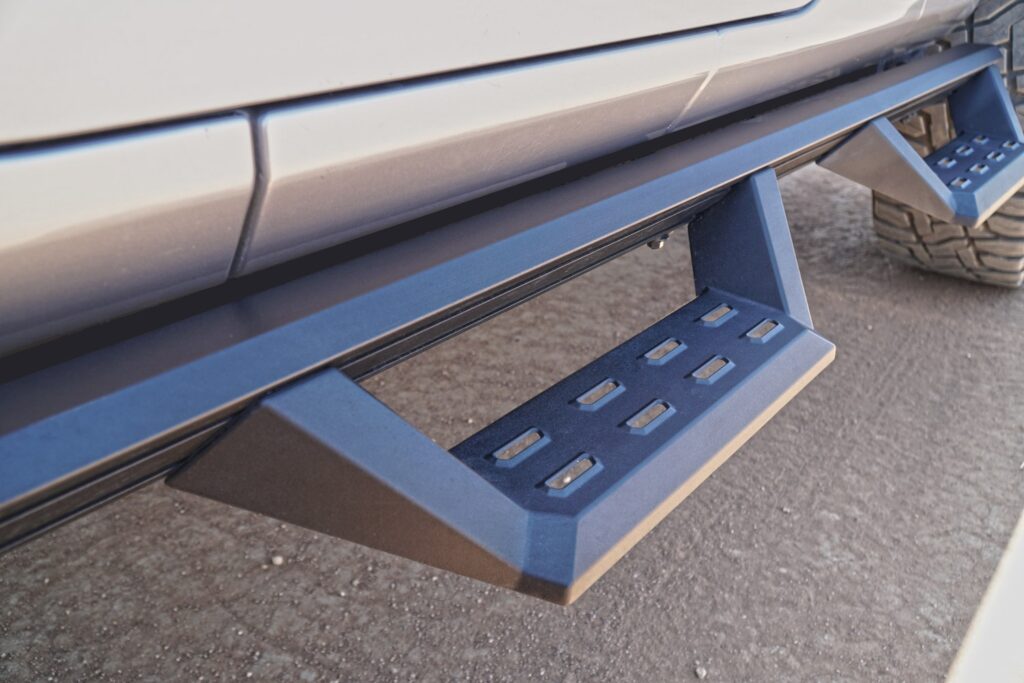
Side Steps / Hoop Steps
Compact steps designed primarily for access, often mounted at each door.
Rock Sliders
Heavy-duty protection designed for off-road trucks, sometimes doubling as a step.
1. Start with Your Primary Goal
Before choosing a style, decide what matters most:
Easier Access
If your truck sits high—especially lifted trucks—wide running boards or powered steps may be ideal.
Best choices:
- Cab-length running boards
- Drop steps
- Power retractable steps
Great for:
- Families
- Kids
- Elderly passengers
- Lifted trucks
2. Consider Your Truck’s Style
For a Clean OEM Look
If you want something that looks factory-installed, low-profile aluminum running boards often blend seamlessly.
Features to look for:
- Black powder-coated finish
- Slim profile
- Textured stepping pads
- Vehicle-specific fitment
Great match for:
- Ford F-150
- Ford F-150 Raptor
- Toyota Tundra
3. Choose Based on Use
Daily Driver
Comfort and convenience matter most.
Look for:
- Wide stepping surface
- Slip resistance
- Corrosion resistance
Work Truck
Durability matters.
Look for:
- Steel construction
- Heavy-duty brackets
- Higher weight ratings
Off-Road Truck
Ground clearance and protection matter.
Look for:
- High-clearance steps
- Rock slider style
- Reinforced steel construction
4. Pick the Right Material
Aluminum Running Boards
Pros:
- Lightweight
- Rust-resistant
- Clean modern appearance
Best for:
- Daily drivers
- Coastal climates
- Long-term corrosion resistance
Steel Running Boards
Pros:
- Strong and rugged
- Great for heavy use
- Off-road capable
Cons:
- Heavier
- Can rust if coatings are damaged
Best for:
- Work trucks
- Trail rigs
- Heavy-duty builds
Stainless Steel
Pros:
- Corrosion resistant
- Polished appearance
- Durable
Good for:
- Premium appearance
- Long-term durability
5. Fixed Steps vs Power Running Boards
Fixed Running Boards
Always visible and ready to use.
Pros:
- Lower cost
- Simpler installation
- Reliable
Power Running Boards
Deploy when doors open and tuck away when closed.
Popular on premium trucks like the Ford F-150 Raptor.
Pros:
- Clean appearance
- Better ground clearance
- Easier entry
Great if you want:
- Luxury feel
- Lifted truck accessibility
- OEM-style upgrades
6. Match Running Boards to Lift Height
Stock Height Trucks
Low-profile running boards usually work well.
Mild Lift (2–4 inches)
Drop steps often offer the best balance.
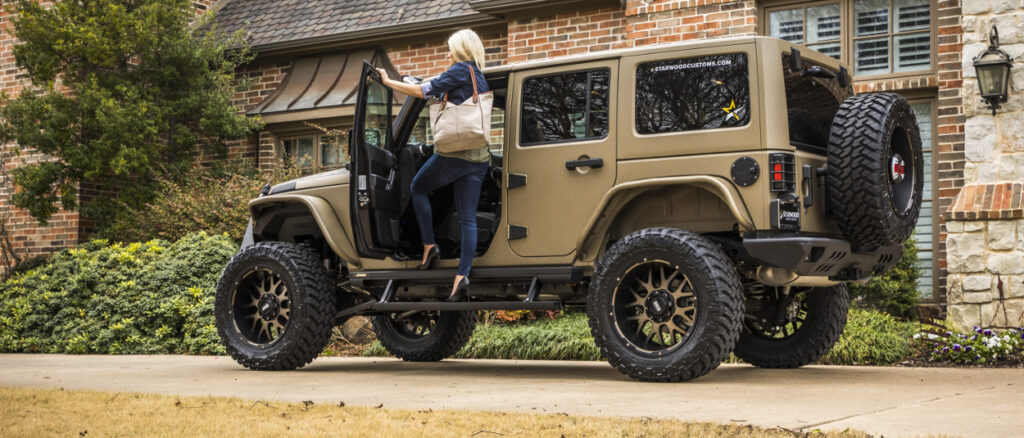
Large Lift (5+ inches)
Consider:
- Deep drop steps
- Wheel-to-wheel steps
- Powered steps
Lifted trucks often benefit from steps that hang lower for easier access.
7. Consider Wheel-to-Wheel Running Boards
If you use your truck bed often, wheel-to-wheel steps can be incredibly useful.
Benefits:
- Extra step near the bed
- Easier access to toolboxes
- Great for work trucks
Popular on:
- Ford Super Duty
- Chevrolet Silverado 2500HD
- Ram 2500
8. Think About Finish and Style
Common finishes:
- Matte black
- Textured black
- Stainless polished
- Color-matched options
Black powder-coated boards remain popular because they pair well with:
- Black wheels
- Window tint
- Fender flares
- Off-road styling
9. Don’t Overlook Weight Capacity
Not all running boards are built the same.
Check:
- Weight rating
- Mounting design
- Bracket strength
This matters especially if:
- Kids jump on them daily
- You use your truck for work
- You regularly carry gear
10. Professional Installation vs DIY
Many modern running boards are bolt-on, but professional installation can ensure:
- Proper fitment
- Correct bracket alignment
- No rattles or flex
- Cleaner finished look
Some powered systems may also require electrical integration.
Popular Running Board Styles at a Glance
Best for Appearance
- Low-profile running boards
- Power steps
Best for Lifted Trucks
- Drop steps
- Power running boards
Best for Off-Road
- Rock sliders
- Heavy-duty step bars
Best for Families
- Wide full-length boards
Best for Work Trucks
- Wheel-to-wheel steps
Final Thoughts
The right running boards should fit both your truck and your lifestyle.
Ask yourself:
- Do I need easier access?
- Do I want rugged protection?
- Am I building for style, utility, or both?
- Is my truck lifted?
- Do I prefer a factory look or aggressive off-road styling?
Whether you prefer sleek OEM-style boards or heavy-duty step systems, choosing the right setup can improve function, comfort, and the overall look of your truck.
If you’re considering running boards for your pickup and want guidance on selecting the right style for your build, professional accessory shops can help match the right solution to your truck and how you use it every day