
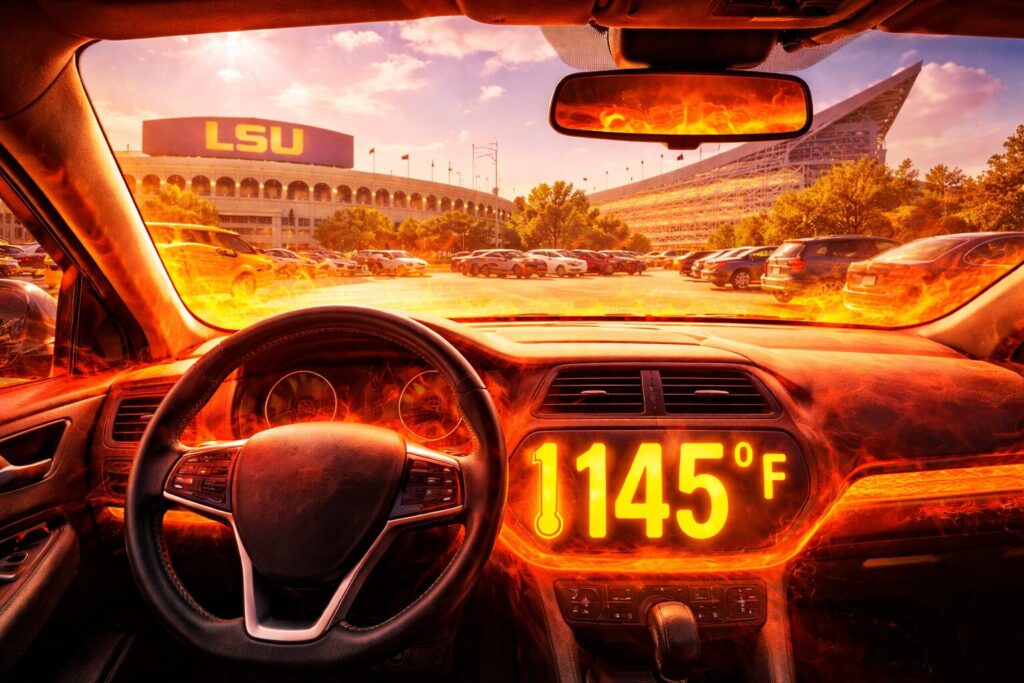
Baton Rouge drivers know how brutal Louisiana summers can be. Parking a vehicle outside for even a short time can turn the interior into an oven. But just how hot do cars actually get under the Baton Rouge sun?
To understand the impact of heat buildup inside vehicles, we looked at several common parking environments around Baton Rouge and compared how quickly temperatures can rise inside a car without window tint.
The results explain why many drivers choose professional window tint installation to make daily driving more comfortable in Louisiana’s climate.
Why Cars Heat Up So Quickly in Baton Rouge
Baton Rouge experiences long summers with intense sun exposure and high humidity. When sunlight passes through untreated vehicle glass, it creates a greenhouse effect inside the cabin.
Sunlight entering through the windows heats interior surfaces like:
• dashboards
• steering wheels
• seats
• center consoles
These surfaces absorb energy and re-radiate heat inside the vehicle. Because the heat becomes trapped, interior temperatures can rise rapidly even if the outside temperature seems manageable.
On typical summer afternoons in Baton Rouge, vehicles parked in direct sunlight can exceed 130–150°F inside the cabin.
Baton Rouge Parking Areas With the Most Heat Exposure
Certain locations around Baton Rouge expose vehicles to prolonged sunlight and high surface temperatures. Large asphalt parking areas with minimal shade are the most common places where cars build heat quickly.
LSU Campus Parking Areas
Many students and staff park for long hours on LSU’s campus. Open asphalt lots with limited shade allow sunlight to heat vehicles continuously throughout the day.
When vehicles sit in direct sunlight during midday hours, interior temperatures can rise dramatically before drivers return to their cars.
Mall of Louisiana Parking Lots
The large open parking areas around the Mall of Louisiana are another example where cars can heat quickly during summer shopping trips. With wide asphalt surfaces and limited tree coverage, vehicles often sit in full sun for extended periods.
Drivers returning to their vehicles frequently notice extremely hot seats, steering wheels, and dashboards after just an hour or two.
Downtown Baton Rouge Surface Parking
Surface parking lots throughout downtown Baton Rouge also expose vehicles to long periods of direct sunlight. During workdays, vehicles may sit in the sun from morning until late afternoon.
Without heat-reducing window film, interior temperatures can build quickly during the hottest part of the day.
How Window Tint Helps Reduce Heat Inside Vehicles
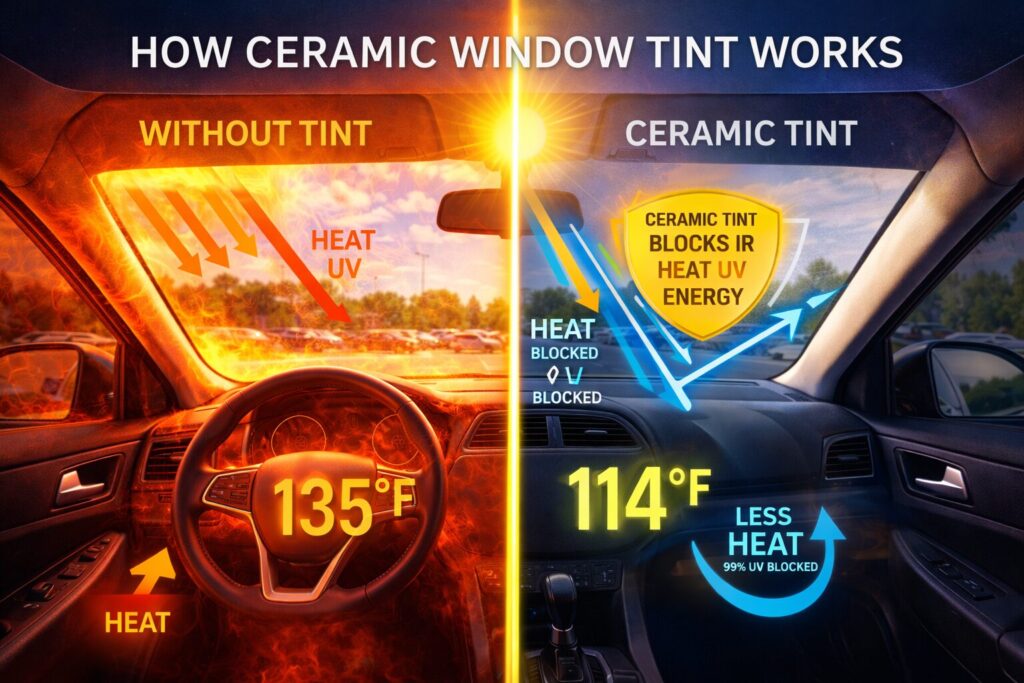
Automotive window tint works by limiting how much solar energy passes through vehicle glass. While darker tint improves privacy and glare reduction, modern ceramic window tint is designed specifically to block infrared heat.
High-performance ceramic films can:
• reduce interior heat buildup
• block harmful ultraviolet radiation
• lower glare during daytime driving
• help interiors cool down faster once the vehicle starts moving
Because Louisiana heat can be intense for much of the year, many drivers choose ceramic window tint even at lighter legal shades to maintain comfort while staying compliant with state tint laws.
Drivers looking for professional window tint in Baton Rouge often install ceramic film specifically to reduce heat buildup during Louisiana summers.
Why Baton Rouge Drivers Choose Ceramic Window Tint
Not all window tint performs the same in high heat environments. Lower-cost dyed films mainly improve appearance and privacy but provide minimal heat reduction.
Ceramic films, on the other hand, are engineered to block infrared heat while maintaining clear visibility through the glass.
For Baton Rouge drivers who park outdoors at work, school, or shopping centers, this difference can make a noticeable improvement in everyday comfort.
Reducing Baton Rouge Heat With Professional Window Tint
With intense sun exposure, high humidity, and long summer days, Baton Rouge drivers often deal with extremely hot vehicle interiors. Professional window tint helps reduce heat buildup and protects interior surfaces from long-term UV damage.
Southern Tint & Detail Pros installs automotive window tint for drivers across Baton Rouge and the surrounding communities. Our shop in Denham Springs is only minutes away, and many customers visit us for professional ceramic film installation designed for Louisiana conditions.
If you’re considering window tint in Baton Rouge, choosing a film designed for heat rejection can make daily driving significantly more comfortable throughout Louisiana’s long summer season.
Frequently Asked Questions About Heat and Window Tint in Baton Rouge
How hot can a car get inside in Baton Rouge?
During Baton Rouge summers, vehicles parked in direct sunlight can reach interior temperatures between 130°F and 150°F within an hour. Dark interiors, leather seats, and large windshield areas can cause temperatures to climb even faster.
Does window tint really reduce heat inside a car?
Yes. Modern automotive window tint — especially ceramic window film — is designed to block infrared heat and ultraviolet radiation. High-quality films can significantly reduce how much heat enters through vehicle glass, helping keep interiors cooler during Baton Rouge’s hot summer months.
How quickly do cars heat up in Louisiana sun?
Cars can heat up surprisingly fast in Louisiana’s climate. Even when outside temperatures are around 90°F, interior temperatures can exceed 120°F within 20–30 minutes when a vehicle is parked in direct sunlight.
What type of window tint works best for Baton Rouge heat?
Ceramic window tint is widely considered the best option for Louisiana heat because it blocks infrared heat while maintaining clear visibility. Many Baton Rouge drivers choose ceramic films because they reduce heat without requiring extremely dark shades.
Is window tint legal in Louisiana?
Yes. Louisiana allows automotive window tint within specific limits for visible light transmission. Drivers should always choose tint that complies with Louisiana window tint laws while still providing effective heat reduction.
Does lighter tint still reduce heat?
Yes. Heat rejection depends on film technology, not just darkness. High-performance ceramic films can block large amounts of heat even at lighter legal shades, making them popular for Baton Rouge drivers who want comfort without extremely dark windows.